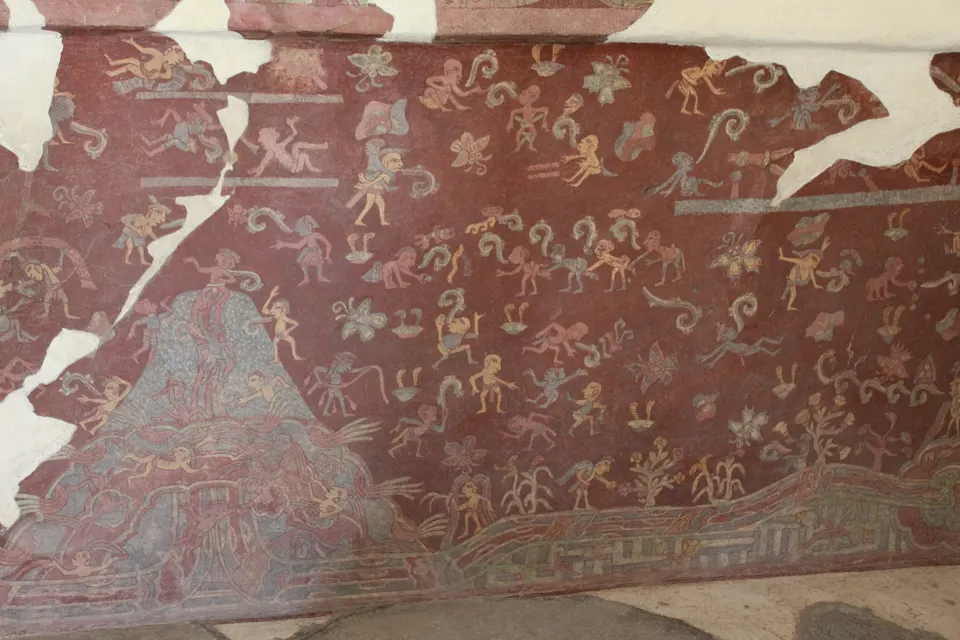
Tepantitla murals and the other painted compounds
Tepantitla is a compound 950 m and 13 minutes north-east of the Pyramid of the Sun, by Gate 4; its Tlalocan mural keeps about 30 percent of its paint, and Tetitla and Atetelco hold the other murals you can visit.
Gate 4950 m · 13 min on foot from the Pyramid of the Sun
What are the Tepantitla murals?
The Tepantitla murals are the painted walls of an elite residential compound east of the ceremonial centre, 950 m from the Pyramid of the Sun. A priestly or high-status family lived here. The compound is not fully excavated.
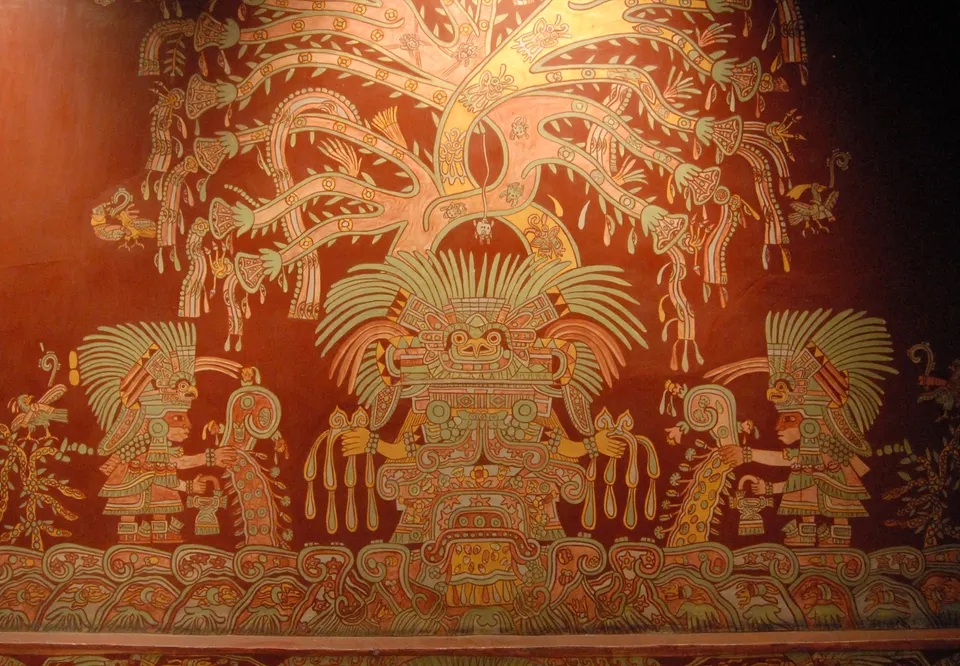
The main mural is on Portico 2. It has three scenes over 100 m². About 30 percent of the paint is left, by the INAH count of May 2026. Alfonso Caso named it Tlalocan in 1942, the paradise of the rain god. INAH’s pages still use that name.
In May 2026 INAH archaeologist Jaime Delgado Rubio proposed a second reading: the Etzalcualiztli agricultural festival, on earth. The central figure is read as Chalchiuhtlicue or the so-called Great Goddess. That name is debated too.
Other walls carry a procession of sower priests, Red Tlalocs and Tlaloc masks. The ballgame scene shows markers and two teams in different headdresses. No ballcourt has been found at Teotihuacan. This wall is the evidence that the game was played here.
You see the originals in place. A large-scale reproduction hangs in the Museo Nacional de Antropología in Mexico City.
How to get to Tepantitla from the Pyramid of the Sun
From the gate: Gate 4, Puerta 4 on INAH’s map, 144 m from the compound. From the Pyramid of the Sun, 950 m and 13 minutes north-east, measured on the map. The INAH guide says about 10 minutes.
Gate 4 sits on the north side, behind the pyramid. It is also the start of the step-free Accessible Trail, 2 km in 2 to 2.5 hours. The trail passes the Plaza of the Moon, the Pyramid of the Sun and the Museum of Teotihuacan Culture.
The bus from Mexico City drops you at Gate 2, facing the Pyramid of the Sun. You walk 530 m and 7 minutes to its foot, then 950 m on to the murals. The MX$210 ticket for international visitors, MX$105 with a Mexican ID, covers the 264 ha visitable zone. INAH places Tepantitla inside it. We found no separate fee.
Tetitla and Atetelco murals between Gate 1 and Gate 2
Tetitla and Atetelco lie across the San Juan River between Gate 1 and Gate 2, outside the fence. They are 1.1 km and 1.4 km from the Pyramid of the Sun in a straight line. INAH lists them with Tepantitla as the three mural areas of the zone. Your ticket covers them.
Tetitla has about 120 painted walls by a guidebook count, many found in the 1940s. Some are restored. You see Tlaloc as god of lightning, eagles with spread wings, plumed pumas on thrones and jaguar priests. One patio stacks paintings from three construction levels.
Atetelco is 380 m from Tetitla on the map. Its White Patio is three temples of 300 to 400 CE. In Portico 2 of the East Temple a procession of coyotes and jaguars walks one behind the other. The paint there mixes originals and restorations. The Red Patio on the upper level has a coloured altar and decoration tied to military activity.
The Outer Trail links Tetitla, Atetelco and Tepantitla: 4 km in 2.5 to 3.5 hours. INAH recommends you take a car or bicycle. Inside the fence, bicycles are not allowed.
Puma Mural and the Museum of Teotihuacan Murals
The Puma Mural is 570 m and 8 minutes from the Pyramid of the Sun, about 100 m south of the Plaza of the Moon. It is on the east side of the Avenue of the Dead, the Calzada de los Muertos.
It was found in 1963. The original is in place under a shelter. You see a large cat in profile with open jaws. The Quick Trail passes it: Gate 2, the Pyramid of the Sun, the Puma Mural, the Pyramid of the Moon, out at Gate 3. It is 2 km in 45 minutes to 1.5 hours.
The Museum of Teotihuacan Murals, the Museo de Murales Teotihuacanos “Beatriz de la Fuente”, stands at Gate 3. It opened in 2001 and holds 73 pieces. Its named piece is the Mythological Animals mural from the Avenue, feathered serpents fighting jaguars. Hours are 09:00 to 16:00. Your MX$210 ticket includes it. More on the museums page.
Can you visit Zacuala and La Ventilla at Teotihuacan?
Not Zacuala: INAH reported it closed to the public in about 2012. We found no later notice of an opening.
For La Ventilla the INAH pages disagree. The visitor site counts it among three compounds open to the public, with Tepantitla and Atetelco; the INAH register of sites names Tetitla instead. We found no gate, hours or walking distance for it.
La Ventilla holds 42 glyphs painted on a plaza floor, the clearest evidence of writing at Teotihuacan. The INAH map names six residential compounds: Tepantitla, Tetitla, Atetelco, Zacuala, Yayahuala and La Ventilla. The first three hold the murals you can see.
When is the best time to visit the Tepantitla murals?
After the Pyramid of the Sun and before 11:30, when the hottest hours begin. INAH puts them at 11:30 to 15:30. Gates open at 08:00. Last entry is 16:30 and the zone closes at 17:00.
By the sun: in at Gate 2 at 08:00, the Pyramid of the Sun first, Tepantitla by 09:00. Then back along the Avenue to the Puma Mural and the Pyramid of the Moon, out at Gate 3 before 11:30.
Water is sold at entrance 3 and at the Museum of Teotihuacan Culture, 530 m and 7 minutes south of the Pyramid of the Sun. Bring a reusable bottle, sunscreen and a hat. The free INAH digital guide has the seven trails, audio and the map.
Tours that stop here
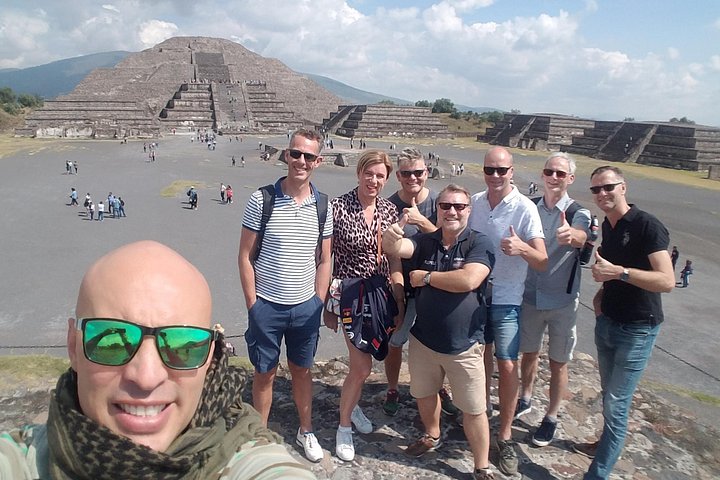
Private Tour: Teotihuacan and Guadalupe Shrine
- MX$210 ticket in the price
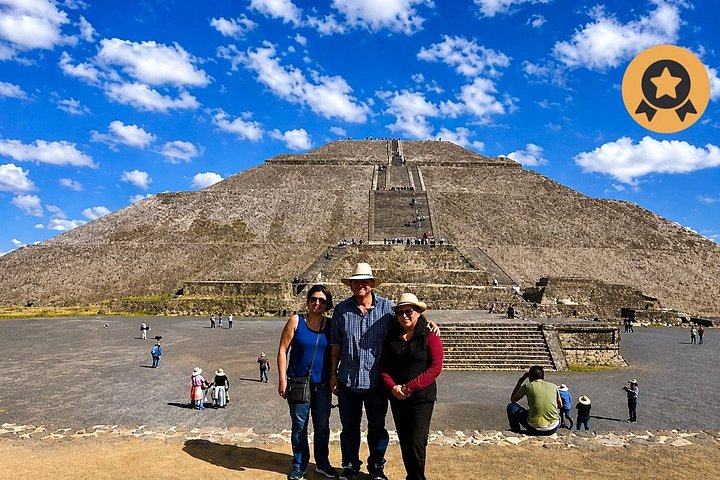
Teotihuacán Private Tour: Journey to the City of Gods
- MX$210 ticket in the price
People also ask
What do the Tepantitla murals show?
A scene Alfonso Caso named Tlalocan in 1942, the paradise of the rain god: small figures, a mountain and plants under a central figure read as Chalchiuhtlicue or the so-called Great Goddess. In May 2026 INAH archaeologist Jaime Delgado Rubio proposed the Etzalcualiztli agricultural festival instead, a scene on earth. Other walls hold a procession of sower priests, Red Tlalocs and the ballgame, the evidence that the game was played at Teotihuacan.
Are the Teotihuacan murals original?
At Tepantitla, yes: the originals are in place with about 30 percent of the paint left, and the large-scale copy hangs in the Museo Nacional de Antropología in Mexico City. The Puma Mural on the Avenue of the Dead is the original under a shelter. At Atetelco the White Patio mixes originals and restorations, and at Tetitla some walls are restored. The Museum of Teotihuacan Murals at Gate 3 holds 73 pieces.
Where are the Teotihuacan murals?
In four places on the site and one museum. Tepantitla is 950 m north-east of the Pyramid of the Sun and 144 m from Gate 4. Tetitla and Atetelco lie across the San Juan River between Gate 1 and Gate 2. The Puma Mural is on the Avenue of the Dead, about 100 m south of the Plaza of the Moon. The Museum of Teotihuacan Murals at Gate 3 holds 73 pieces, the Mythological Animals mural among them.
Can you visit Tetitla and Atetelco?
Yes. INAH lists them with Tepantitla as the three mural compounds of the visitable zone, and the MX$210 ticket covers the whole zone; we found no separate fee. They lie across the San Juan River between Gate 1 and Gate 2, 1.1 km and 1.4 km from the Pyramid of the Sun in a straight line. INAH's Outer Trail covers Tetitla, Atetelco and Tepantitla in 4 km and 2.5 to 3.5 hours, with a car or bicycle recommended.
Is the Tepantitla mural included in the Teotihuacan ticket?
Yes. The MX$210 ticket for international visitors, MX$105 with a Mexican ID, covers the archaeological zone and all on-site museums, and INAH places Tepantitla inside the 264 ha visitable zone. We found no separate fee for any of the mural compounds. Sundays are free for nationals and residents. Tickets are sold at the booths of the five gates; Gate 4 is the nearest one to Tepantitla, 144 m away on the map.
Sources: INAH · INAH Boletín 200 · Lonely Planet · UNAM IIE, Boletín 23 · INAH on-site panel 'Mural del Puma' · INAH Visita Teotihuacán · INAH Boletín 186 · OpenStreetMap. Updated 4 November 2026. Found a mistake? Tell us.